Cart
0
You may also like


You may also like
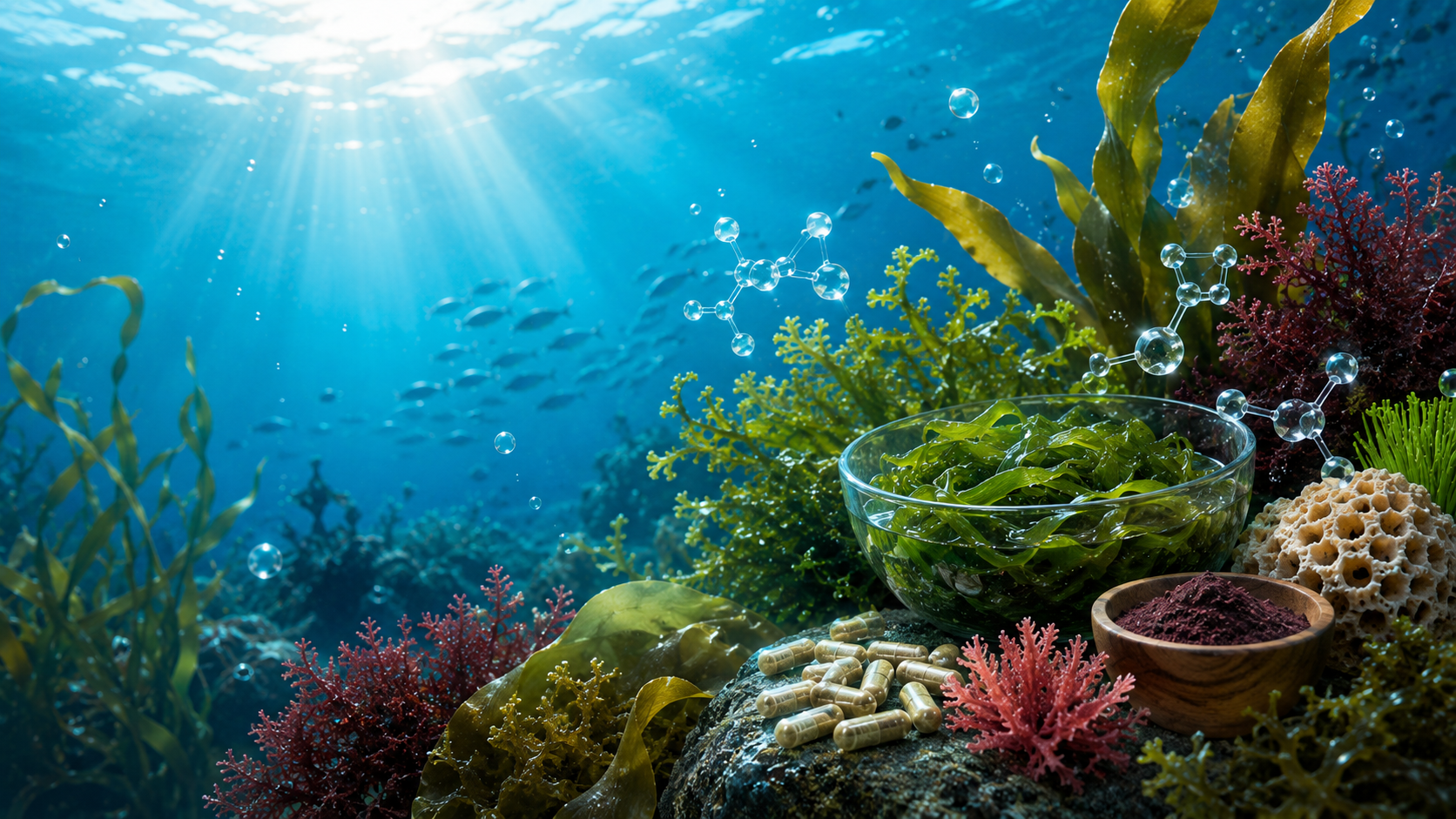

Table of Contents
Wellness has always borrowed from nature. Lately, though, the conversation is shifting toward a part of nature most people barely think about: the ocean. There's a quiet but steady rise in interest around marine botanicals and wellness, and it isn't coming from clever marketing. It's coming from something simpler. The sea has been offering nutrient-dense plants for centuries, and modern wellness is only now starting to pay attention.
This isn't about chasing a new superfood. It's about recognising that ocean-derived nutrition has been hiding in plain sight all along, and the science behind it is finally getting the attention it deserves.
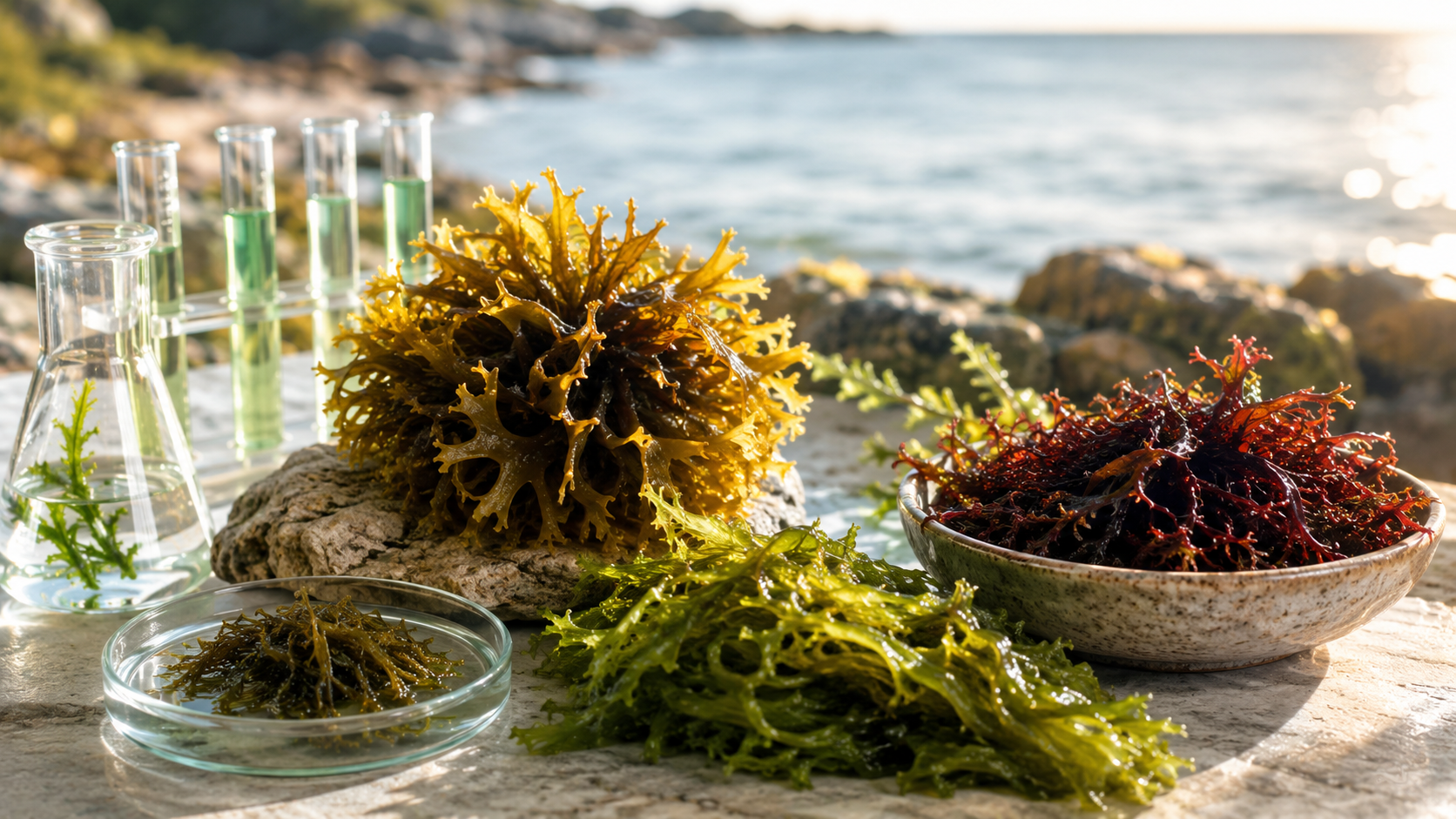
Marine botanicals are plants that grow in and around the ocean, things like algae, seaweeds, and marine plants that absorb nutrients directly from seawater as they develop. Unlike land-based crops, these plants grow in an environment that's naturally rich in minerals, and that shapes everything about their nutrient profile.
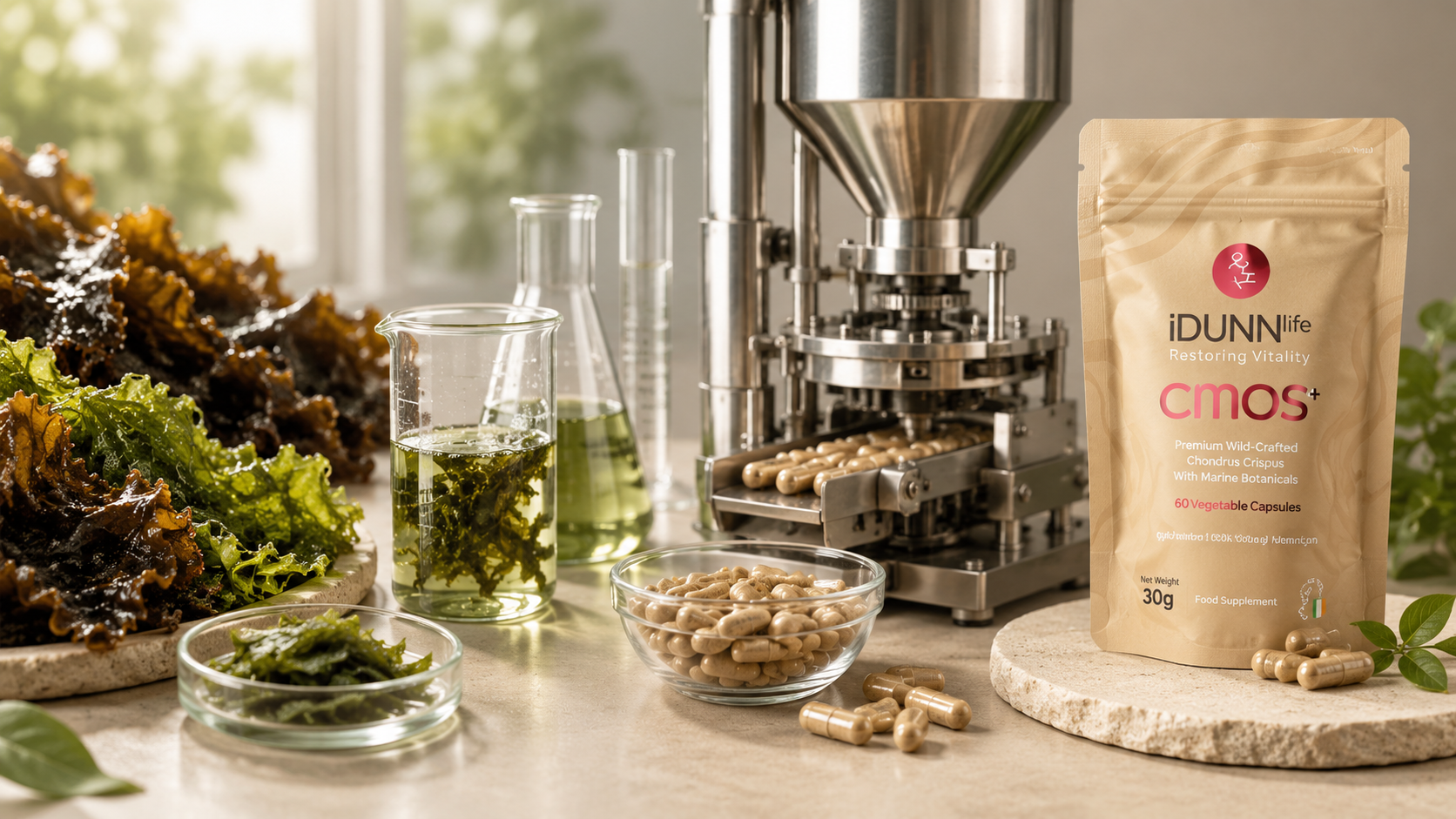
Some of the most studied marine botanicals include red algae like Chondrus crispus, better known as Irish sea moss, along with various brown and gold algae species. Each one has its own distinct composition, but they share a common thread. They're nutrient-rich ocean plants, shaped by an environment that land-based nutrition simply can't replicate.
Decades of intensive farming have worn down the mineral content of agricultural soil. Even a carefully chosen, healthy diet can fall short on certain trace minerals because of it. Marine plants don't have that problem in the same way. They draw their nutrients from the ocean, not from depleted soil, which gives them a meaningfully different nutritional starting point.
A return to traditional wellness practices
Coastal communities in Ireland, the Caribbean, and parts of Asia have used marine botanicals as part of everyday nutrition for generations. It was never a trend for them. It was just how they ate and looked after their health. That traditional use is now meeting modern curiosity, and that's a big part of why marine wellness is gaining real traction instead of fading like so many short-lived health fads do.
People are reading labels more carefully these days, and they're asking harder questions about where their supplements actually come from. Ocean-derived nutrition fits that demand well, because the source is identifiable and traceable in a way that heavily processed, synthetic alternatives often aren't.
One of the standout things about marine botanicals is their natural mineral content. Ocean environments hold a broad range of trace elements, things like iodine, zinc, selenium, and manganese, and marine plants absorb these as they grow. That gives them a mineral density that's hard to find in any single land-based plant.
Marine botanicals also carry naturally occurring compounds that are unique to ocean plants, including marine polysaccharides, fucoidan, and alginates, along with various polyphenols. Researchers are still working to fully understand these compounds, but their presence is part of what makes marine-derived nutrients structurally different from typical land-based plant nutrition. It's an area of marine botanical science that's only getting more attention.
The real value of marine botanicals comes from their full nutrient matrix, not from any single isolated compound. Whole-plant marine nutrition reflects the complexity of the ocean itself: broad, varied, and naturally balanced rather than artificially concentrated.
Among marine botanicals, Irish sea moss has become one of the most familiar names. Specifically the Chondrus crispus variety, it has a long history in Irish and Caribbean wellness traditions, valued for its mineral content and its role in supporting nutritional balance.
What sets genuine Chondrus crispus apart isn't just its history, though. It's its consistency. Wild-harvested, properly sourced marine botanicals carry a nutrient profile shaped directly by their ocean environment, something that simply can't be replicated synthetically.
Marine wellness doesn't need to be complicated. A daily supplement made from properly sourced marine botanicals, taken consistently, is genuinely enough to support a foundational approach to nutrition. The benefit comes from showing up regularly over time, not from one large dose taken occasionally.
That's a big part of why marine botanicals and wellness keep coming up together in conversation. They fit naturally into simple, sustainable daily habits instead of demanding a whole new complicated regimen.
Not all marine botanical products are made with the same care. A few things genuinely matter here:
These details are usually what separates a genuinely well-made marine botanical product from one that's simply riding the popularity of the category without the substance behind it.
As research into ocean-derived nutrition keeps expanding, marine botanicals are likely to move further into mainstream wellness conversations. Not as a passing trend, but as a properly recognised category of whole-source nutrition. Growing consumer awareness, paired with more rigorous testing standards across the industry, is pushing marine botanicals toward the same level of scrutiny and respect already given to well-established land-based superfoods.
Marine botanicals and wellness are connected by something pretty simple. The ocean has always offered nutrient-rich plants, and people are finally starting to notice. From Irish sea moss to broader marine mineral sources, ocean-derived nutrition offers a whole-source approach that fits how people increasingly want to support their health: naturally, consistently, and with real transparency about where it all comes from.
This isn't about chasing the next wellness trend. It's about recognising a nutrient source that's been right there the whole time, finally getting the attention it deserves.
1. What are marine botanicals?
2. What are the benefits of marine botanicals?
3. What is ocean-derived nutrition?
4. Is Irish sea moss a marine botanical?
5. What minerals are found in marine botanicals?
6. How do marine botanicals fit into a daily routine?
7. What should I look for in a marine botanical supplement?
8. Why is marine wellness becoming more popular?