Cart
0
You may also like


You may also like
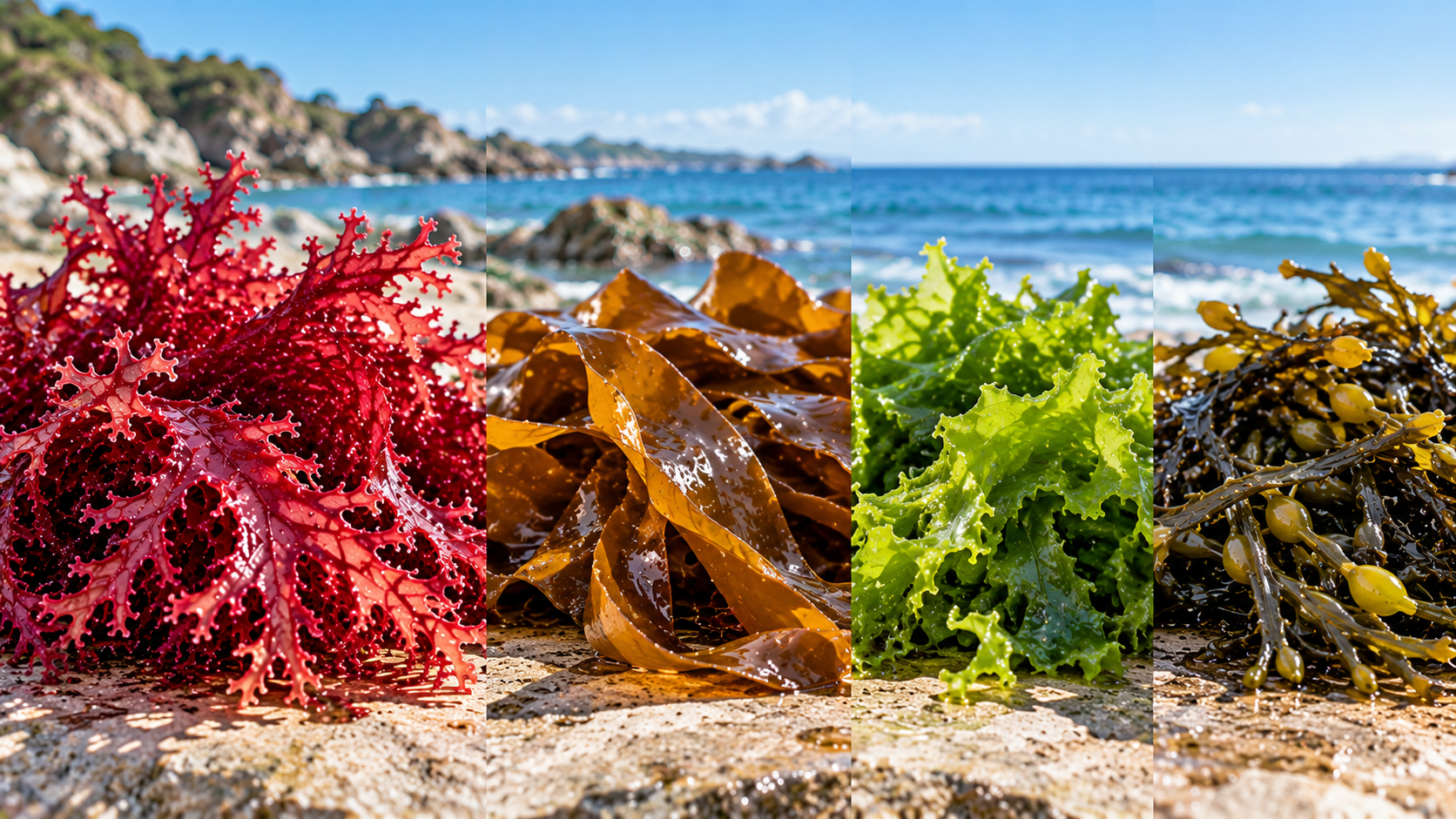

Table of Contents
Stand in front of any shelf of seaweed products and you will quickly notice how loosely the words are used. Kelp, nori, dulse and sea moss all get called seaweed, yet they are different plants with different textures, compounds and iodine levels. If you have wondered how Chondrus crispus vs seaweed in general really compares, you are asking exactly the right question. This guide explains where Irish sea moss sits among its relatives, how to compare them sensibly and what to check on a label. It is educational rather than medical advice.
Chondrus crispus is a red seaweed that grows on the rocky, tidal shores of the cold North Atlantic. Its fan-shaped fronds range from deep purple to golden green depending on light and season, and it is better known as Irish moss or Irish sea moss. In Ireland it has long been gathered by hand and simmered into milk puddings, which is why you may also see the old name carrageen moss.
Not always. Irish sea moss is Chondrus crispus, but the words sea moss are also used for other red seaweeds such as Gracilaria and Eucheuma, which are often farmed in warmer waters. They can look similar and gel in a similar way, so the Latin name on the label is the only reliable guide.
This table compares Irish sea moss with the seaweeds you are most likely to meet. Treat it as a guide, since composition shifts with species, season and harvest site.
|
Seaweed |
Type |
Typical habitat |
Characteristic compounds |
Iodine tendency |
Common use |
|
Chondrus crispus (Irish sea moss) |
Red |
Cold North Atlantic shores |
Carrageenans |
Varies, best confirmed by testing |
Gels, capsules, cooking |
|
Kelp (kombu) |
Brown |
Cold, nutrient-rich waters |
Alginates, fucoidan |
Often very high |
Stocks, flakes |
|
Wakame |
Brown |
Temperate coasts |
Alginates, fucoidan |
Moderate to high, varies |
Soups, salads |
|
Bladderwrack |
Brown |
Rocky Atlantic shores |
Alginates, fucoidan |
Often high |
Herbal products |
|
Dulse |
Red |
Cold North Atlantic |
Soluble fibre, trace minerals |
Varies, check testing |
Flakes, snacks |
|
Nori |
Red |
Coastal farms |
Protein, porphyran |
Generally lower than kelp |
Sushi sheets |
Cold Atlantic origin: it grows in cold, tidal water, which shapes both its texture and the minerals it takes up, although content still varies by site and batch
A carrageenan-rich gel: as a red alga it is rich in carrageenans, which is why it turns thick and silky when soaked and blended, unlike the more leathery, alginate-rich brown seaweeds
A defined single species: Chondrus crispus is one named plant, whereas a “seaweed blend” on a label can mean almost anything
A long culinary history: it has been gathered for generations in Ireland, long before it became a wellness ingredient
Chondrus crispus nutrition is shaped mainly by two things: polysaccharides and minerals. The polysaccharides are chiefly carrageenans, which behave like soluble fibre in a gel. The minerals are absorbed from seawater, and commonly reported ones include iodine, calcium, magnesium and potassium, along with trace elements. Exact amounts depend on the species, the shoreline, the season and how the seaweed was dried and processed, which is why figures should come from laboratory testing rather than a generic table.
Broadly, red seaweeds such as Chondrus crispus lean toward carrageenans, while brown seaweeds lean toward alginates and fucoidan and tend to carry much more iodine. Green seaweeds such as sea lettuce form a third group. Within each colour group the differences between species are still large, so colour is only a starting point.
Kelp is the headline example. Brown algae such as kelp are often described as among the most iodine-dense foods in the human diet, and one study of sugar kelp noted that the amount can exceed recommended intake. Chondrus crispus is usually far lower, but it is not iodine-free, and levels vary by harvest. The practical rule in any Chondrus crispus vs seaweed comparison is to ask for tested figures rather than assume.
If you have a thyroid condition, are pregnant or breastfeeding, or take medication, speak with your healthcare provider before using any seaweed product.
Often, yes. Wildcrafted sea moss is gathered by hand from natural beds, usually at low tide, so supply follows the seasons and the sea. Much of the sea moss sold online is instead farmed in warmer water, frequently from a different species. Wild and farmed seaweeds can differ in texture, mineral content and traceability, which is why sourcing information matters.
Responsible harvesting matters too. Hand harvesting in measured amounts leaves the beds healthy for the following season, a topic we cover on our sustainability page.
Whole leaf Irish sea moss is usually turned into a gel, while capsules suit people who want a no-prep routine.
Gel: soak the dried leaf, rinse it well, blend it with fresh water until smooth and keep it refrigerated
Capsules: a simple option, with the serving size set out on the label
In cooking: a spoonful of gel can thicken soups, smoothies and desserts, much as it did in traditional Irish puddings
Knowing how to use Irish sea moss sensibly means starting small, following the serving on your product and staying consistent rather than taking more.
There is no universal winner. At its simplest, the Irish sea moss vs seaweed question is a question of purpose and species. A few things decide it:
What you want it for: a soft gel for the kitchen, a daily capsule and an occasional flavouring are different jobs
Your iodine situation: sensitivity, thyroid conditions, pregnancy and medication all change what is appropriate
Texture and taste: Irish sea moss is mild and gel-forming, while kelp and bladderwrack are stronger and saltier
How much the label tells you: transparency often matters more than the seaweed's name
The same checks apply across Chondrus crispus vs seaweed products of every kind:
The Latin name, Chondrus crispus, stated clearly
Whether it is wild or farmed, and where it was harvested
Independent testing for iodine, heavy metals and microbiology
Batch-level results you can ask to see
A single ingredient or a blend, with every ingredient named and no unnecessary fillers
At iDUNNlife, we use wildcrafted sea moss from the Atlantic coast of Ireland, and every batch is tested by JHG Analytical Services in Waterford, Ireland, with lab reports available to read. Our view of Chondrus crispus vs seaweed is simple: name the species, measure the iodine and publish the results.
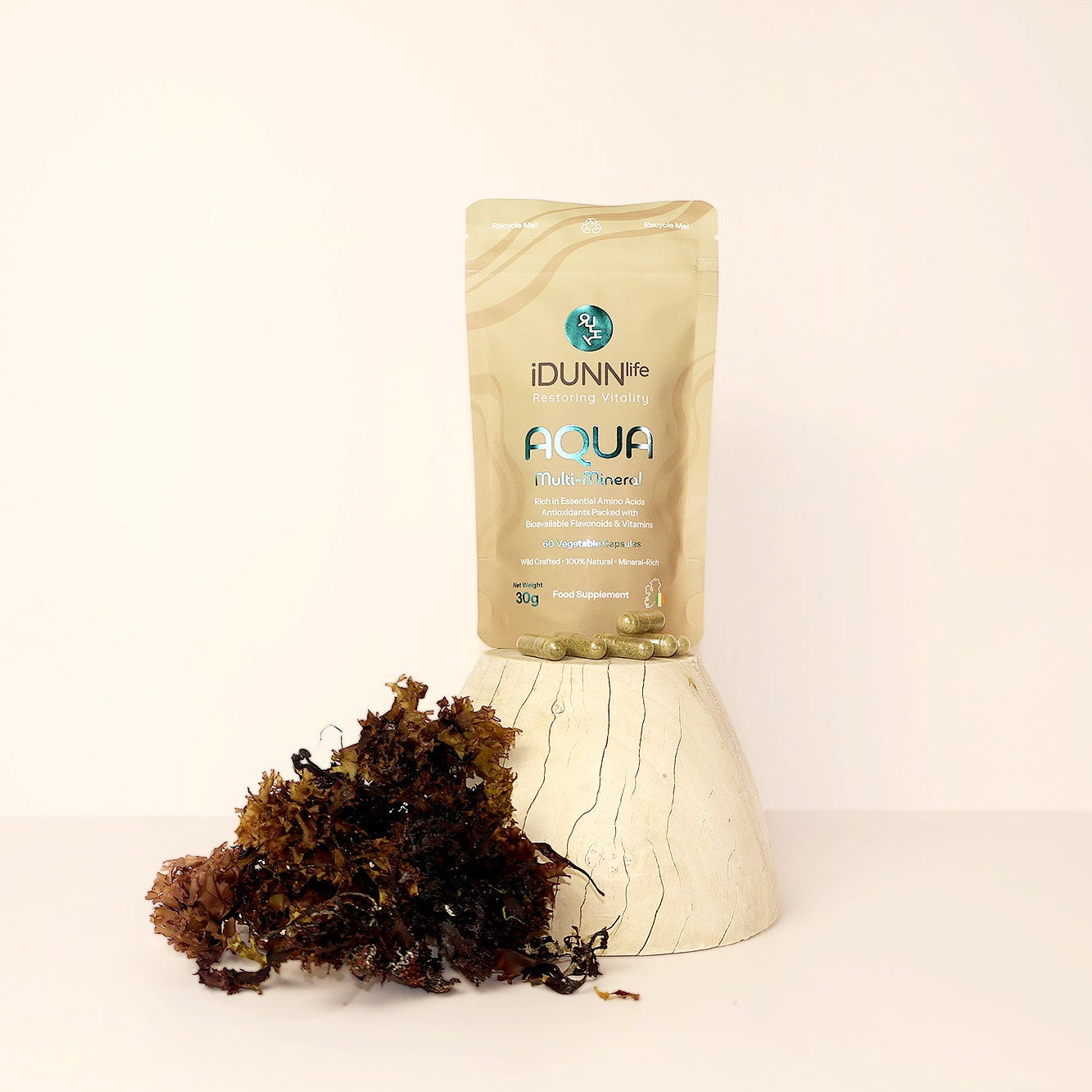
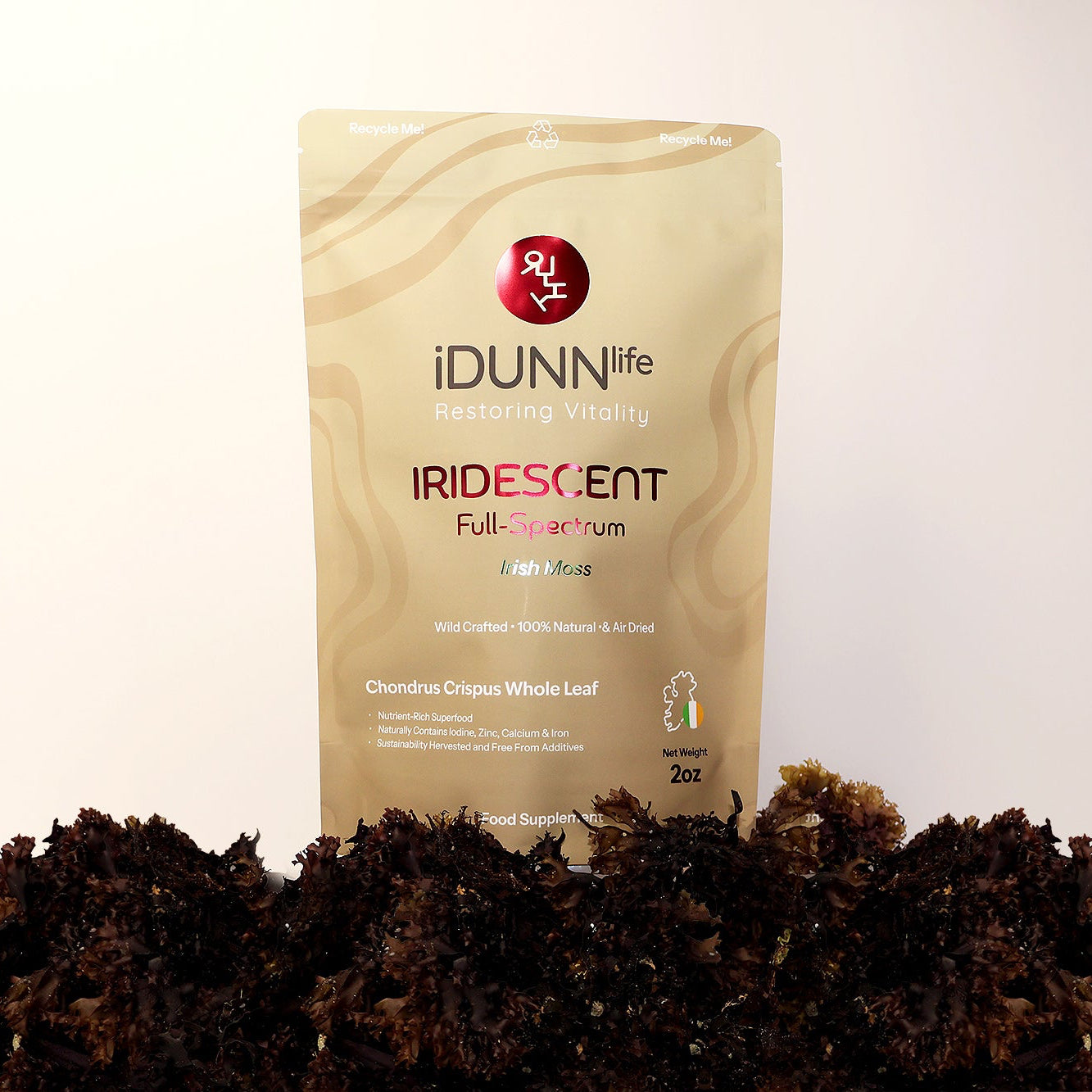
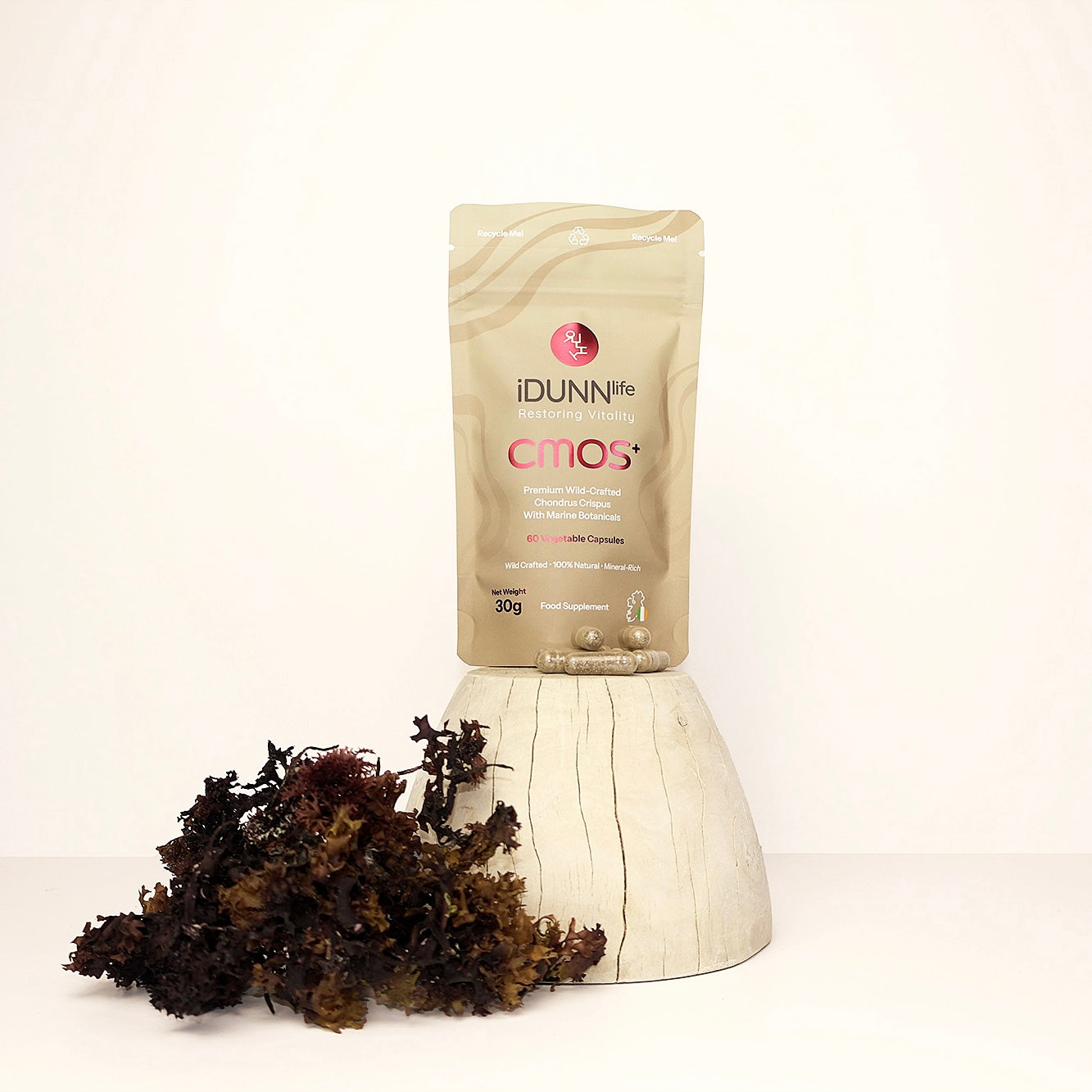
CMOS is a single-ingredient Chondrus crispus formula, CMOS+ pairs red and brown marine algae with bladderwrack and burdock root, and AQUA combines four marine algae. If you prefer to make your own gel, browse the whole leaf marine algae collection, including Sunkissed Golden Seamoss. You can also read about our ingredient transparency approach.
The Chondrus crispus vs seaweed question has no single winner. Irish sea moss stands out for its cold Atlantic origin, its carrageenan-rich gel and its status as one clearly named species. Other seaweeds bring different compounds and, often, far more iodine. Whatever you choose, read the label closely, ask for tested results and use it with care.
For more practical guides, visit the iDUNNlife blog, or read about the thinking behind the brand on the Science page.
Sources and further reading
PubMed Central: Estimating Japanese iodine intake from seaweed consumption
NCBI LactMed: Seaweed
Q1. Is Chondrus crispus the same as Irish moss?
Q2. Is Irish sea moss a seaweed?
Q3. Does Chondrus crispus contain iodine?
Q4. Chondrus crispus vs kelp: which is better?
Q5. Is carrageenan the same as Chondrus crispus?
Q.6. Can you take Chondrus crispus every day?


