Cart
0
You may also like


You may also like


Table of Contents
Vitamins get most of the attention in nutrition, but minerals quietly do just as much work. They help enzymes function, support nerves and muscles, and form part of our bones. The sea is one of the oldest mineral sources on the planet, and people have eaten seaweed, fish, and shellfish from it for thousands of years. This guide looks at marine minerals in nutrition in plain language: where they come from, how they compare with other sources, and what to check before you buy anything. It is educational rather than medical advice.
Marine minerals are minerals that come from the sea. Seawater holds dozens of dissolved elements, and marine life takes them up as it grows. Algae are the clearest example, since they absorb minerals directly from the water around them, but fish and shellfish end up carrying a share too. The word "marine" describes the source, not a special kind of mineral. Magnesium from the sea is still magnesium.
The mix typically includes the major minerals sodium, magnesium, calcium, and potassium, plus trace elements such as iodine, zinc, selenium, copper, and manganese.
Marine minerals and trace minerals overlap, but they describe different things. Trace minerals are defined by quantity: the body needs them in very small amounts. Marine minerals are defined by origin. A seaweed can supply major minerals such as magnesium and calcium alongside trace ones such as iodine, so one term is a category of size and the other a category of source.
Minerals support enzymes, hormones, nerve signals, fluid balance, and bones. Marine minerals in nutrition work the same way as any other mineral source: the body cannot tell where an element came from, but it does respond to the form, the dose, and the food around it. Sea-based foods are simply one more route to minerals, alongside meat, dairy, grains, nuts, seeds, and vegetables.
This quick reference shows some minerals commonly found in marine foods. Amounts vary widely, so treat it as a guide.
|
Mineral |
Role in the body |
Common marine sources |
|
Iodine |
Needed to make thyroid hormones |
Seaweed, fish, shellfish |
|
Magnesium |
Energy metabolism, muscle, and nerve function |
Seaweed, some fish |
|
Calcium |
Bone and tooth structure |
Seaweed, sardines, and other fish eaten with the bones |
|
Potassium |
Fluid balance, nerve signals |
Seaweed, fish |
|
Zinc |
Normal immune function, enzyme activity |
Oysters, shellfish |
|
Selenium |
Antioxidant enzymes, thyroid hormone activity |
Fish, shellfish |
Marine minerals in nutrition come from a handful of everyday sources:
Seaweed and other marine algae: absorb minerals directly from seawater and are the main plant-based marine source
Fish and shellfish: provide zinc, selenium, iodine, and iron, often in forms the body absorbs well
Unrefined sea salt: mostly sodium chloride with small amounts of other minerals, so not a meaningful route to trace elements
Seawater concentrations vary widely in quality and strength, which makes label transparency especially important
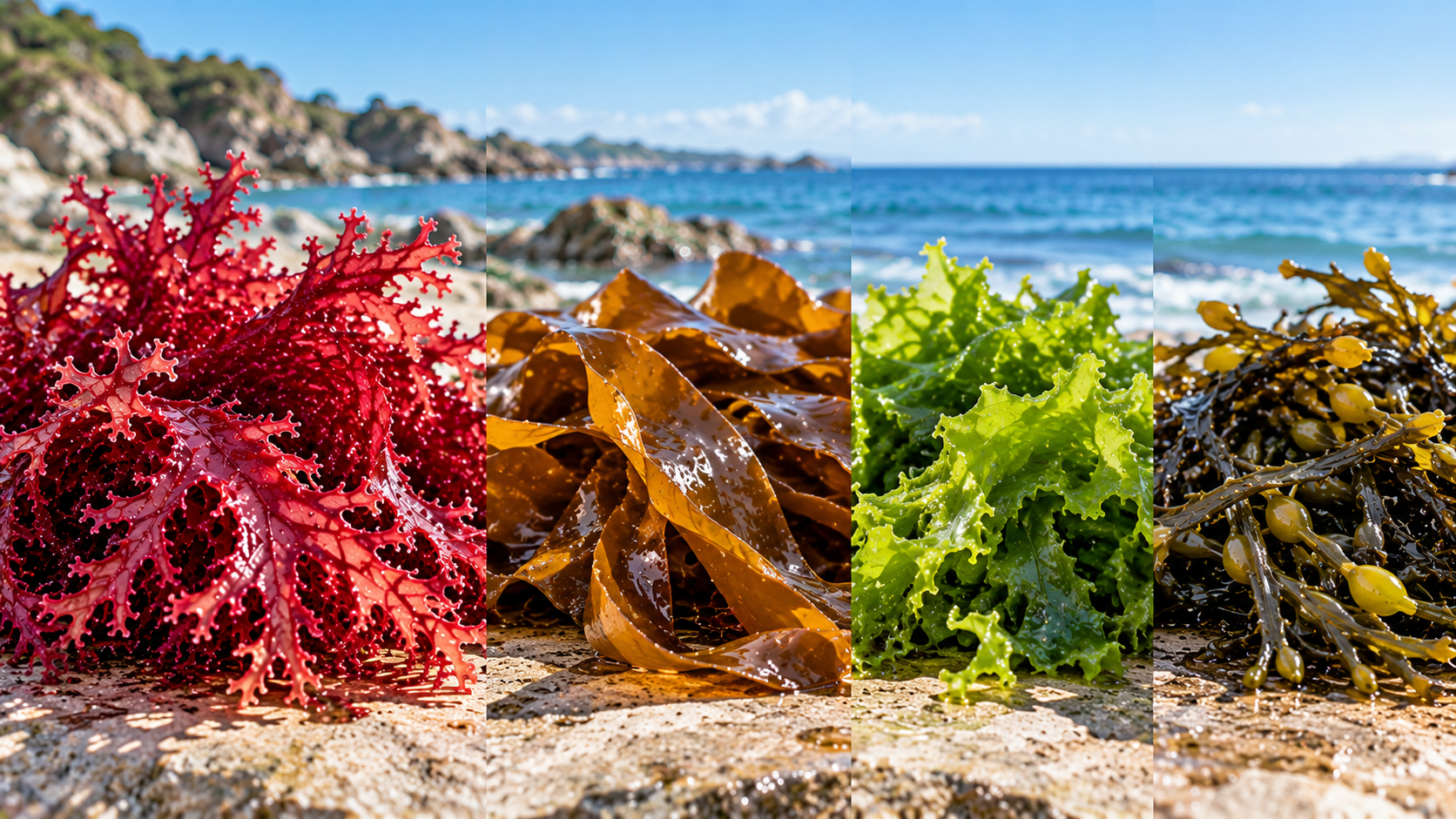
Marine algae minerals vary far more than most people expect, because each group of algae stores them differently.
Red algae such as Chondrus crispus and dulse: known for gel-forming carrageenan, with iodine that varies by species
Brown algae such as kelp and bladderwrack: generally much higher in iodine, sometimes dramatically so
Green algae such as sea lettuce: less common in supplements, with their own mineral profile
Harvest location, season, and drying and processing change the numbers again, even within a single species.
Seaweed takes up whatever is in the water, which includes useful minerals and, at polluted or poorly chosen sites, unwanted metals such as arsenic or cadmium. Iodine is the other variable. It is essential, but too much is as problematic as too little. Published studies agree that iodine levels vary with species, harvest location, and preparation, so independent testing of each batch is the only dependable way to know what a product contains.
Research on the benefits of marine minerals as a category is still developing, so it helps to stay precise. What is well established is that the minerals themselves are essential. Iodine contributes to normal thyroid function, magnesium to normal energy metabolism and muscle function, calcium to normal bones, and zinc to normal immune function. Whether the benefits of marine minerals differ from those of the same minerals eaten in other foods is less clear, and anyone who promises dramatic effects is going beyond the evidence.
Synthetic minerals are made in laboratories or refined from mineral salts and are usually added to products as isolated compounds such as oxides, citrates, and gluconates. Marine minerals arrive inside a whole plant or animal, alongside other naturally occurring compounds.
In a marine minerals vs. synthetic minerals comparison, the evidence that one is absorbed better than the other is limited and mixed, because absorption depends on the mineral form, the dose, and what is eaten with it. The real trade-off is different:
Whole-food sources offer a broader mix of compounds, but amounts vary from batch to batch
Synthetic forms are easier to dose precisely and are well studied, but they arrive as isolated compounds
Neither is automatically better. What matters is a clear label and good testing.
There is no single winner, because the right product depends on the person and the mineral. Judging marine minerals in nutrition from a label alone is hard, so look for transparency:
The exact species named in Latin, not just seaweed or sea vegetable
Whether it is wild or farmed, and the harvest region
Independent testing for minerals, iodine, heavy metals, and microbiology
Batch-level lab reports you can read for yourself
Iodine clearly declared
No unnecessary fillers, with every ingredient named
Start with food: a varied diet that includes seafood, nuts, seeds, legumes, and whole grains covers most needs
Follow the label: never exceed the recommended serving, and remember that several products can add up
Take care with iodine: check the iodine content of any seaweed product, especially if you have a thyroid condition
Speak with a professional before starting if you are pregnant, breastfeeding, taking medication, or managing a health condition
Used this way, marine minerals in nutrition add variety to a balanced diet rather than replace it.
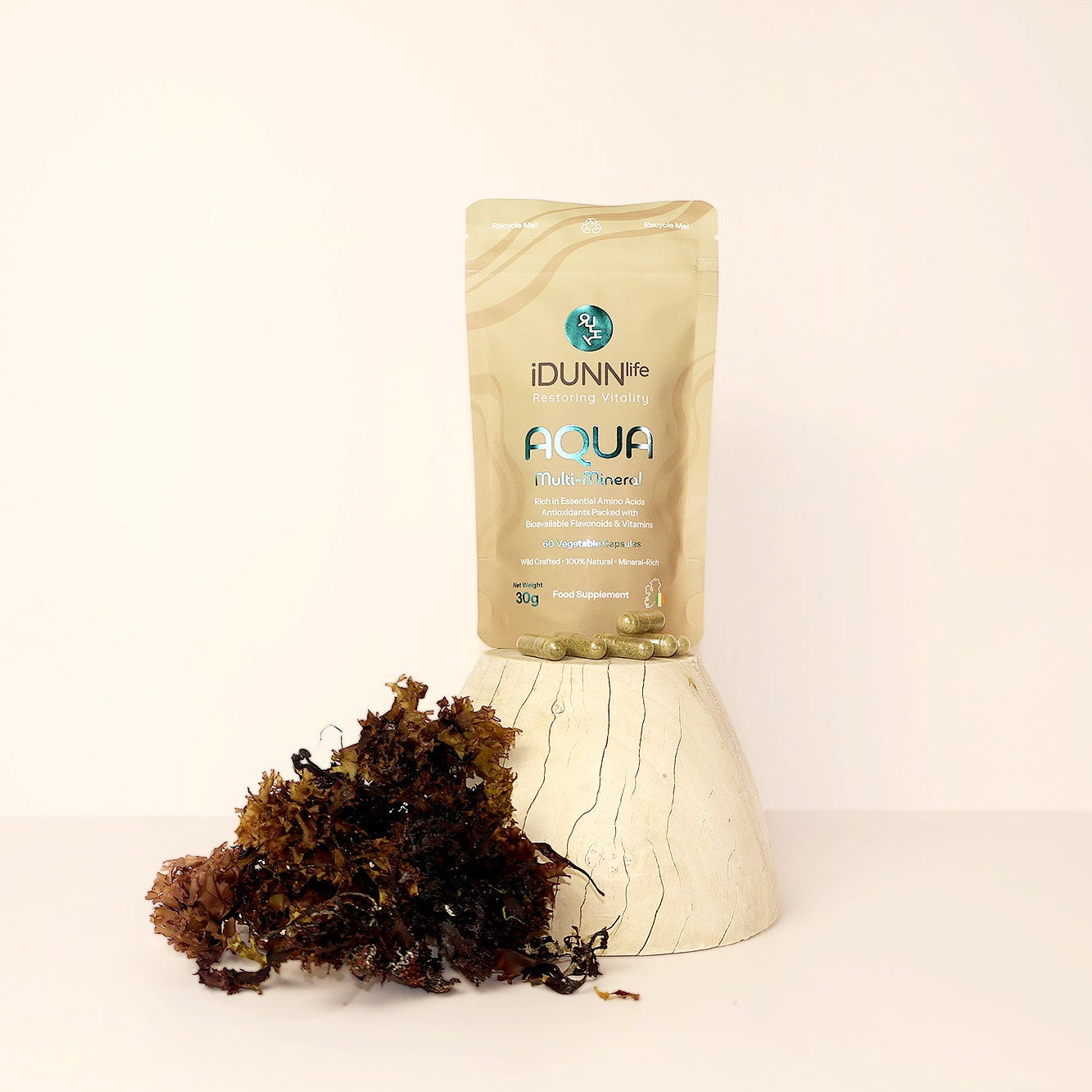
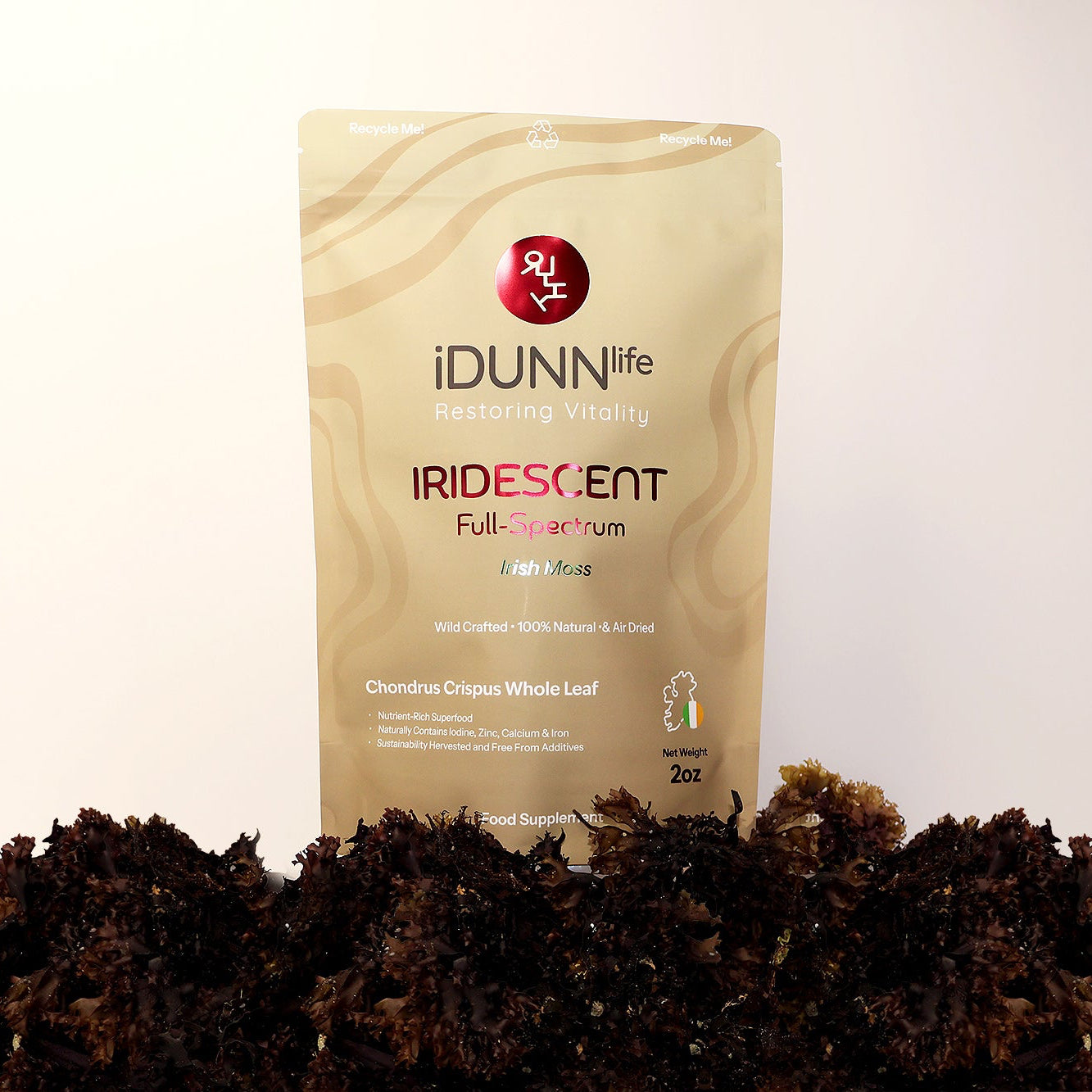
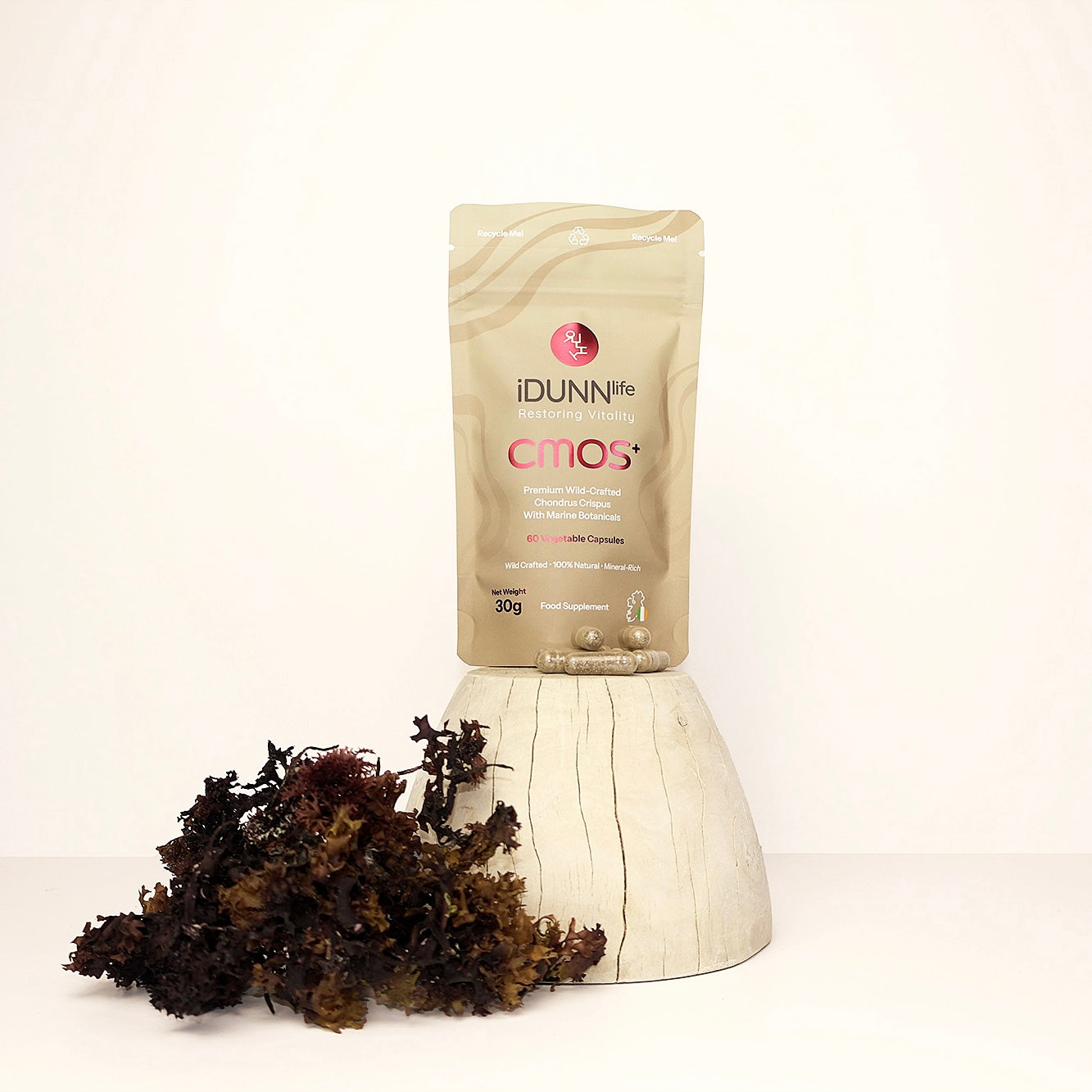
iDUNNlife is built around marine mineral nutrition, and our approach to marine minerals in nutrition starts with testing. Every batch is checked by JHG Analytical Services in Waterford, Ireland, and the lab reports are available to read. CMOS is a single-ingredient wild Atlantic Chondrus crispus formula, CMOS+ pairs red and brown marine algae with bladderwrack and burdock root, and AQUA combines four marine algae. Our practitioner page goes deeper into mineral profiles, and you can browse the full trace elements collection or read about our ingredient transparency approach.
Marine minerals in nutrition are best seen as one useful source among many, not a shortcut. The sea offers a broad range of elements; algae are an efficient way of gathering them, and testing turns a promising ingredient into a trustworthy one. Read the label, ask for lab results, and use any seaweed-based product with care.
For more practical guides, visit the iDUNNlife blog, or read about the thinking behind the brand on the Science page.
Sources and further reading
MedlinePlus: Minerals
NIH Office of Dietary Supplements: Dietary supplement fact sheets
PubMed Central: Estimating Japanese iodine intake from seaweed consumption
These statements have not been evaluated by the FDA or EFSA. These products are not intended to diagnose, treat, cure, or prevent any disease and are not a substitute for a varied diet. Please consult your healthcare provider before use.
Q1. What are the most common marine minerals?
Q2. Where can you find natural sources of marine minerals?
Q3. Are marine minerals the same as trace minerals?
Q4. Are marine minerals better than synthetic ones?
Q5. Is it safe to take seaweed-based minerals?
Q6. What should you look for in the best marine mineral supplements?